
How to choose the right shade structure for your school?
Planning a new shade structure is an opportunity to make your school’s outdoor spaces more functional. Before choosing a solution, consider how the area is used, what students and staff need from it, and how the project will fit within the existing school grounds.
Coverage, weather protection, access, budget and ongoing maintenance all influence the design. Working through these considerations early helps establish a clear brief before comparing options or requesting proposals.
Coverage, weather protection, access, budget and ongoing maintenance all influence the design. Working through these considerations early helps establish a clear brief before comparing options or requesting proposals.
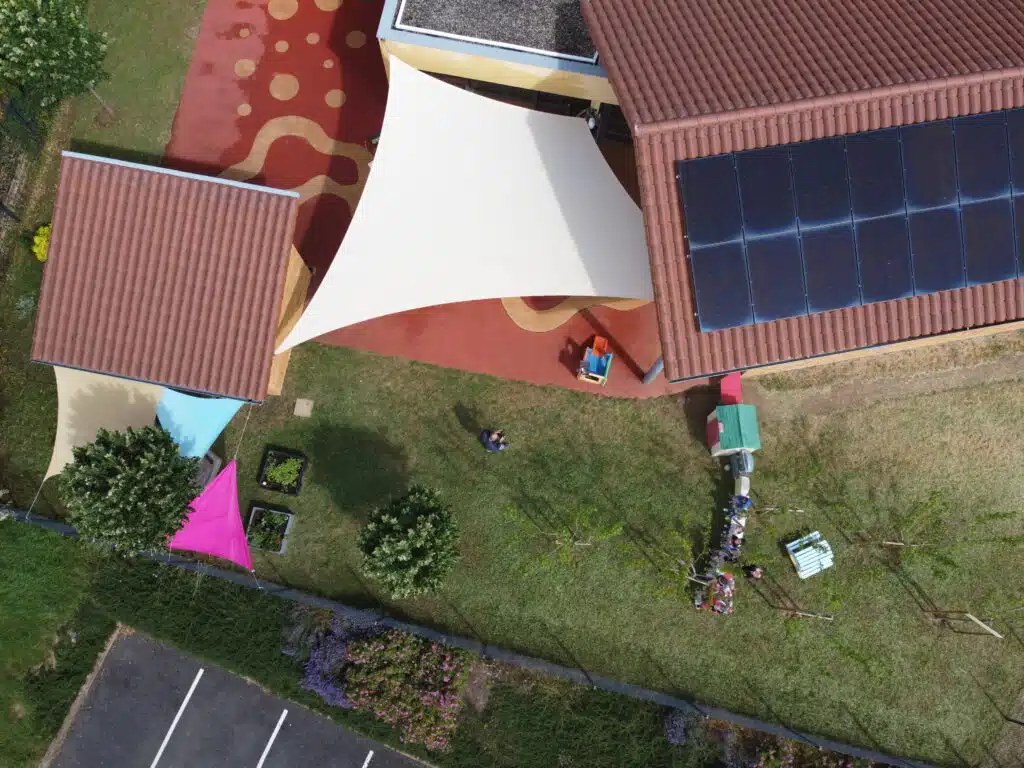
Start with the space and the school day
Identify who uses the area and at what times. A lunch courtyard, an outdoor classroom and a sports court have different requirements for coverage, clear height and column locations. Include future plans for seating, play equipment or changes to the surrounding grounds.
Useful questions include:
• Where do students and staff need shade at recess, lunch time and during lessons?
• How many people should the area accommodate?
• Is the priority sun protection,rain protection or both?
• Which paths, sight lines and emergency access routes must remain clear?
• What budget and completion dateis the school working towards?
Ask for the proposed shade coverage to be shown at the times the space will actually be used. The outline of a canopy on a plan does not show where its shadow will fall throughout the day or across different seasons.
Shade sails or waterproof canopies
Shade and rain protection are separate requirements. Porous shade cloth allows water through, so a shade sail made from that material should not be specified as a rain shelter. Waterproof fabrics are available, but the whole structure needs to be designed for the selected material and water runoff.
If students need to eat, learn or move between buildings during wet weather, include that requirement from the start. Even a waterproof roof will not fully enclose a space or prevent wind-driven rain entering from the sides.
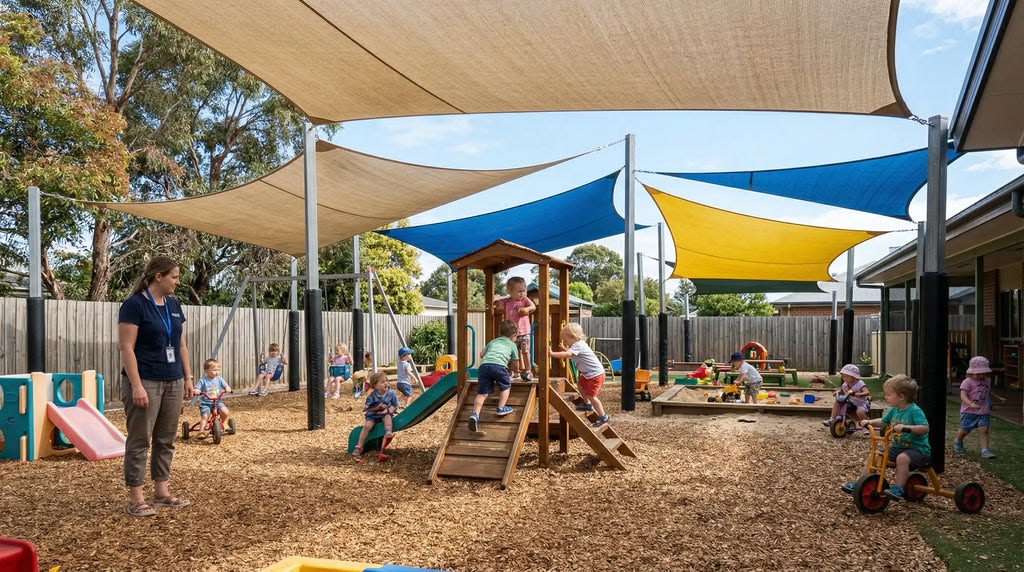
Comparing school shade structures
Shade sails
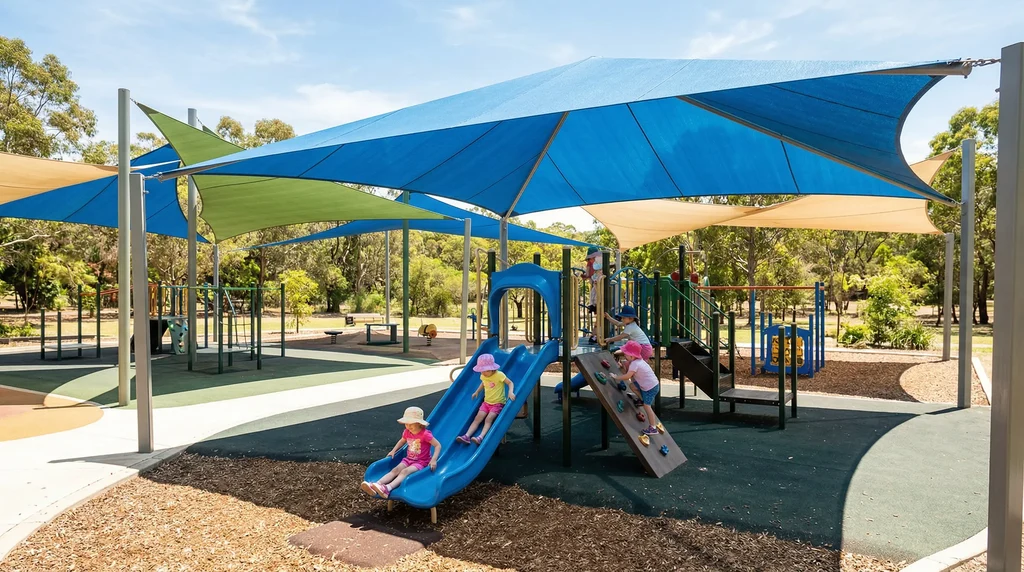
Shade sails can work well over playgrounds, courtyards and outdoor eating areas. Their shape and arrangement can respond to an irregular space, and multiple sails can cover separate activity zones.
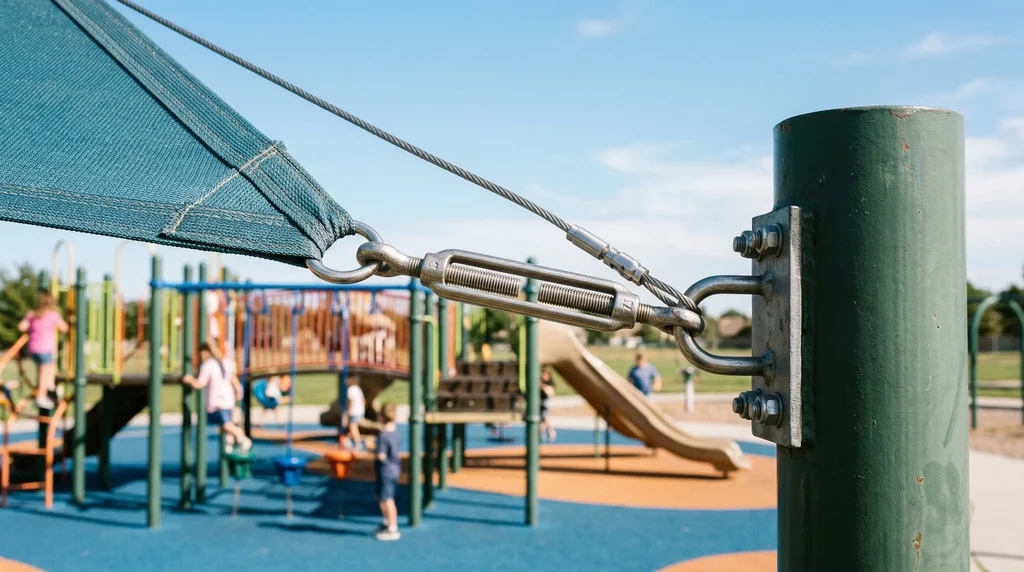
Check the usable shade beneath the proposed layout, including gaps between sails. Discuss fabric performance, fixing heights, post positions and access for future tensioning or replacement. Existing buildings, posts or retaining walls should only be used as fixing points after their suitability has been assessed.
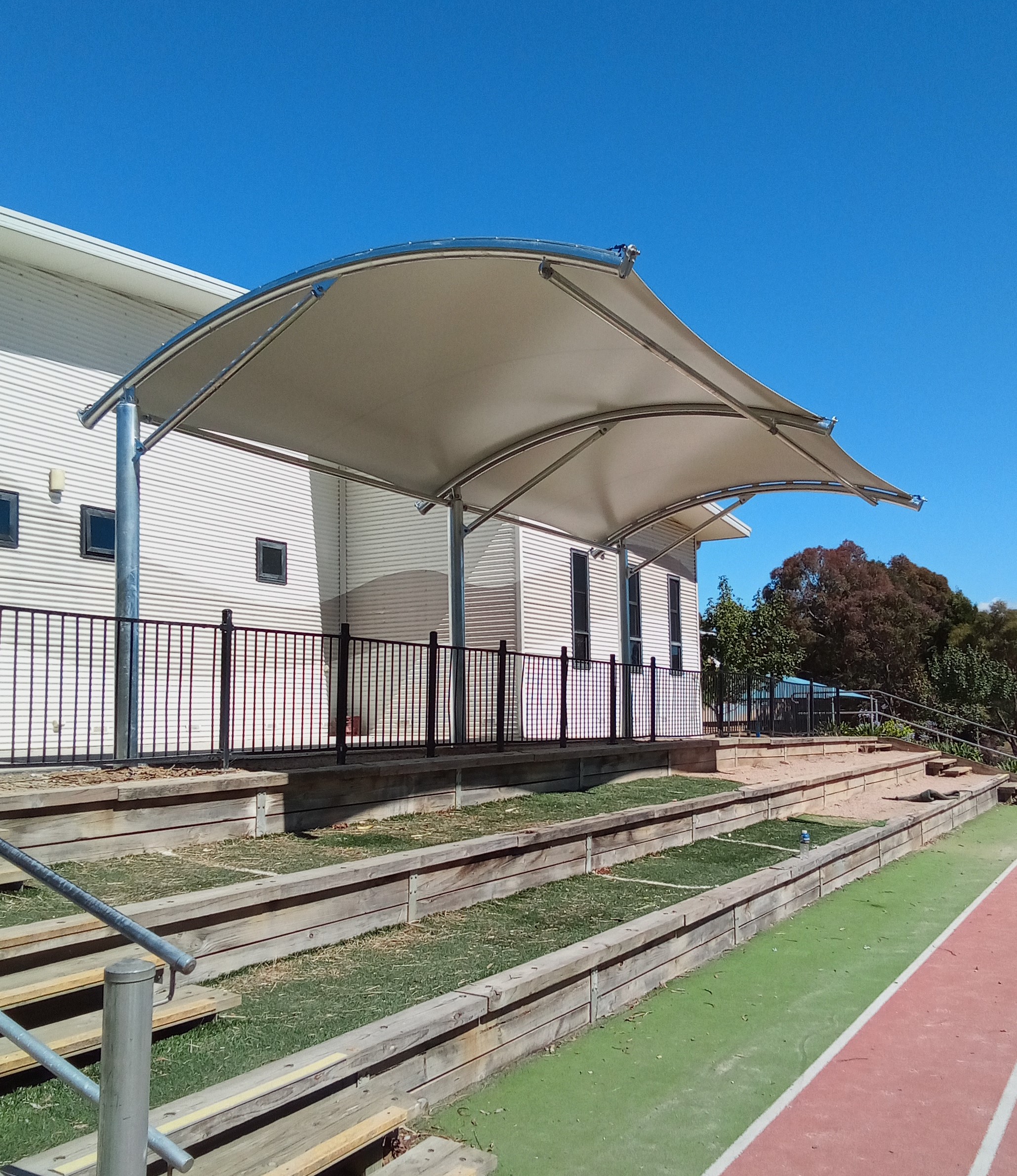
Tensile membrane canopies
A tensile membrane canopy is worth considering for a larger gathering area, outdoor learning space or sports facility. Waterproof membrane options can provide both shade and rain protection, subject to the complete design.
Confirm the clear span, roof height and column arrangement against the activities beneath it. For sports courts, consider ball trajectories, run-off areas and any proposed lighting. Include drainage, foundations and installation access in the early design discussions.
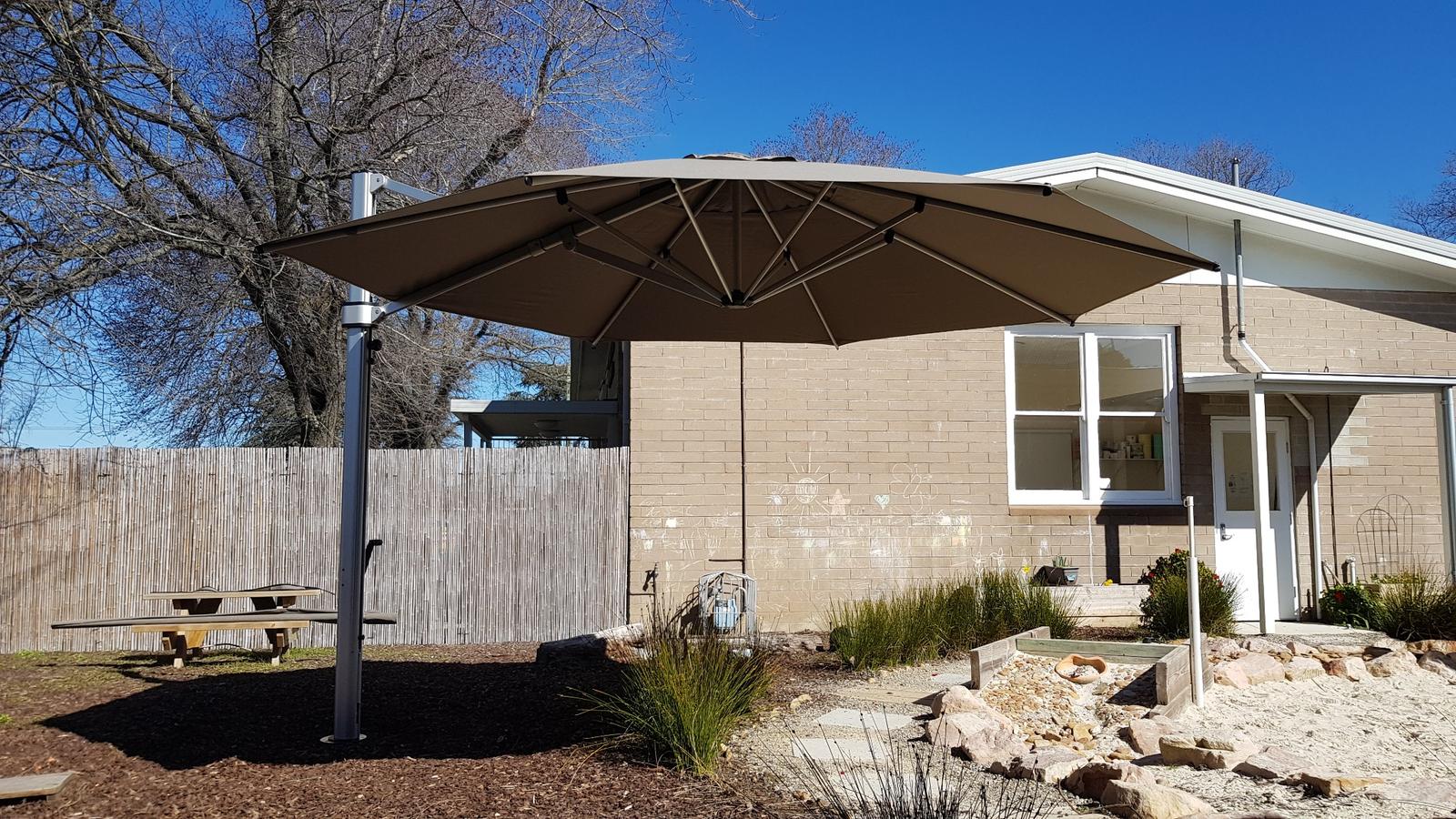
Commercial umbrellas
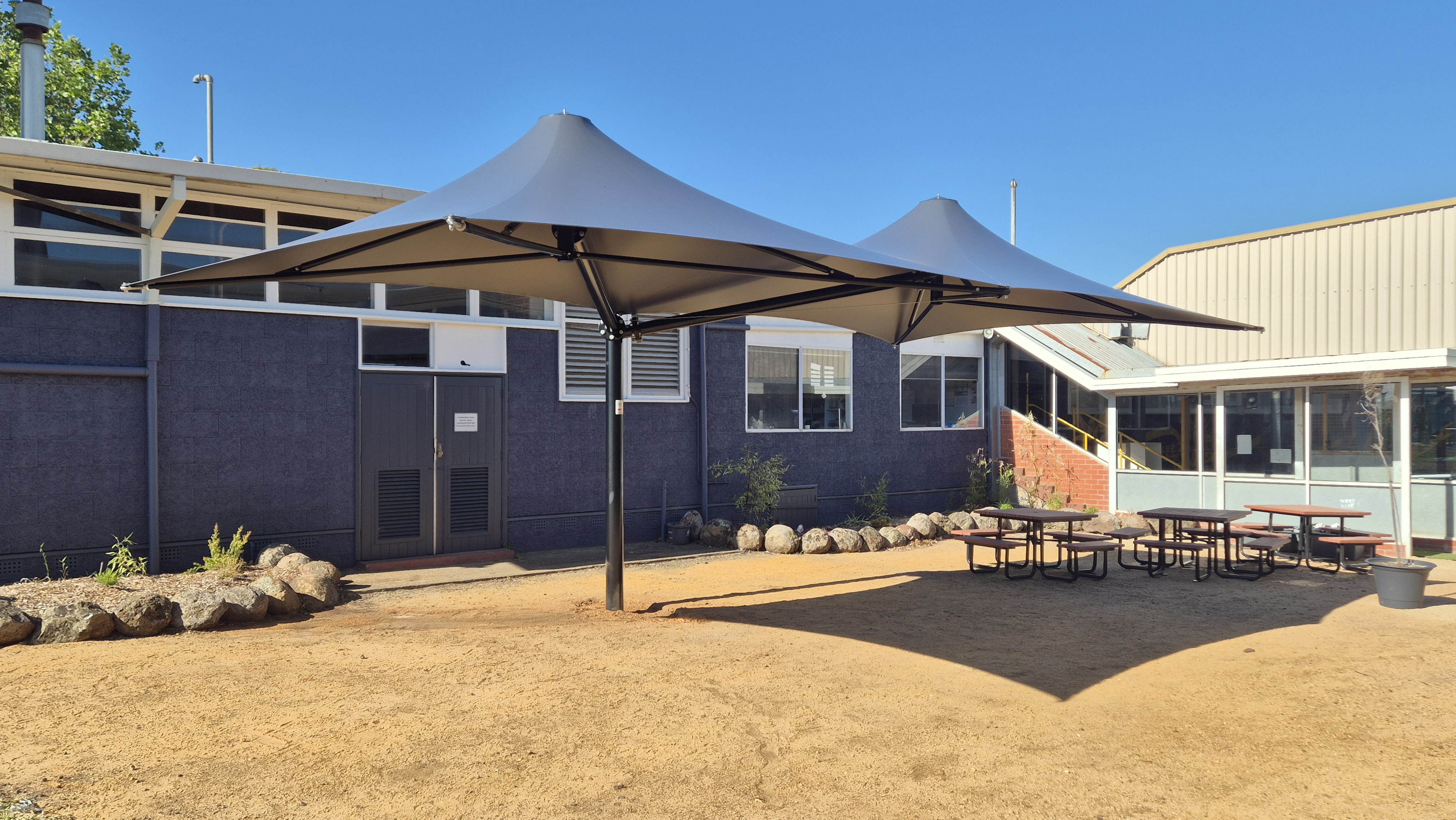
Commercial umbrellas can provide focused coverage over tables, seating and smaller courtyards. Check whether a fixed, removable or retractable system best suits the school’s needs.
Relocation is only practical where the product and fixing arrangement allow it. Ask about wind limitations, closure procedures and who will operate the umbrellas. Bases and posts must also be considered in the pedestrian layout; a domestic umbrella should not be assumed suitable for a busy school environment.
Checking fabric and UV performance
Ask for the proposed fabric’s tested UV performance and product documentation. Do not assume that a colour, marketing description or general shade percentage establishes the level of UV protection.
The structure’s design matters along side the fabric. Open sides, reflected UV and changes in the sun’s position can affect protection beneath the canopy.
Cancer Council recommends using shade alongside other sun protection measures. See its sun protection guidance when reviewing how the new structure will support your school’s sun protection practices.
Plan for maintenance before selecting a product
Ask for inspection and cleaning requirements, warranty terms and likely replacement components. Consider how staff or contractors will safely access the fabric, tensioning hardware and drainage outlets. Compare what the warranty covers with the maintenance needed to keep it valid.
What affects the cost of school shade structures
A meaningful budget needs a defined siteand scope. Two canopies with a similar roof area can have different installed costs because of their span, height, foundations, material specification and access requirements.
Useful questions include:
• Site measurements, service locating and any ground investigations.
• Design, structural engineering and required approval applications.
• Fabric or membrane, steel work, finishes, fixings and foundations.
• Drainage and connection to the agreed discharge point where required.
• Delivery, lifting equipment, site barriers and protection of existing surfaces.
• Reinstatement, inspections, handover documents and warranty information.
Separate fixed prices from allowances and exclusions. A supply-only canopy price cannot be compared directly with a complete design-and-installation proposal. Also compare the usable coverage each option provides during the school day.
Coordinate shade with surrounding outdoor works
Look beyond the footprint of the roof. Posts and footings may affect paths, garden beds, seating, underground services or neighbouring structures. Plan rainwater discharge so it does not create problems in adjoining areas.
Where the proposed shade area is beside an ageing retaining wall, assess the wall before fixing the layout or excavating nearby. Our guide to replacing damaged retaining walls at schools explains the related questions about foundations, drainage and surrounding loads.
Check permits and engineering early
Permit requirements depend on the school, location and proposed structure. Planning permission and building permits are separate checks, so confirmation that one is not required does not settle theother.
For Victorian government schools, the Department of Education’s shade-sail policy states that planning permits are not required for shade sails. That specific policy should not be applied to independent schools or assumed to cover every type of canopy. Engineering and other applicable requirements still need to be resolved.
Read our article on planning permits and council approval for school outdoor refurbishment for the broader approval pathway, then confirm the requirements for your final scope.
Victorian government schools should also refer to the Department’s current shade-sail policy when planning the projectand ongoing inspections.
Plan installation around school operations
A holiday installation window needs preparation well before the end of term. Site investigations, design, approvals, fabrication and contractor availability all influence the programme. Ask for these stages to be included in the proposed timeline.
The installation plan should address student separation, delivery routes, lifting operations, noise, emergency access and protection of existing courts, paving and landscaping. If work takes place during term, agree how the school will continue using nearby spaces safely.
Common questions about school shade solutions
Can we replace the fabric and keep the existing posts
Possibly, following an assessment of the supports, footings, connections and proposed fabric loads. Changing the sail’s size, shape or material can change what the structure must carry. Confirm suitability before treating reuse as a budget saving.
How long will the shade structure last
There is no single lifespan for every system. Fabric, coatings, steelwork and moving parts have different maintenance and replacement needs. Ask for product-specific design-life information and warranties, together with the conditions and exclusions that apply.
Can a shade structure be installed during school holidays
It may be possible if design, approvals and fabrication are completed in time. Confirm the entire programme before committing to a holiday completion date, including any site work that must happen before installation.
Discuss your school shade project with BELCORE
BELCORE can coordinate site assessment, design, engineering, required approval applications, procurement and installation as one outdoor works package. We can also include associated drainage, paths, landscaping and reinstatement in the project scope.
If you are considering shade sails, a tensile membrane canopy or commercial umbrellas, send us photographs, an approximate area, your intended use and target timing. Include any available plans and let us know whether rain protection is required.
Contact BELCORE to discuss your school shade projector email projects@belcore.com.au with your plans and brief.
This article provides general guidance. Material selection, structural design and approval requirements should be confirmed for the individual site and proposed structure.